
Table of Contents
- Introduction
- What Are Chelated Minerals?
- Biological Role of Trace Minerals in Poultry
- Why Chelated Minerals Are Superior to Inorganic Forms?
- Detailed Insights from the 2025 MDPI Meta-Analysis
- Chelated Minerals & Egg Quality (Insights from Springer 2024)
- Mechanisms: Why Chelated Minerals Work Better
- Practical Considerations for Poultry Nutritionists
- Conclusion
- Frequently Asked Questions (FAQs)
- About Titan Animal Nutrition
- References
Introduction
Minerals though required in trace amounts are essential to the life, growth, productivity, health, and reproductive success of poultry. They serve as cofactors for enzymes, structural components of bones and feathers, regulators of metabolic pathways, and contributors to immune function. However, not all mineral sources are created equal. Poultry nutritionists have increasingly turned to chelated minerals and trace elements bound to organic ligands because they offer superior absorption and utilization compared with traditional inorganic mineral salts. The result is improved animal performance, reduced environmental impact, and more efficient feed formulations.
In this article, we provide a comprehensive, evidence-based overview of chelated trace minerals in poultry diets, drawing on clinical data especially from the 2025 MDPI meta-analysis and the 2024 Springer review on trace minerals in laying hens to explain why chelated minerals matter, how they work, and how they benefit poultry production.
What Are Chelated Minerals?
Chelated minerals are trace elements (such as zinc, copper, manganese, iron, and selenium) that are chemically bound to organic compounds, usually amino acids, peptides, or other ligands. This bonded (chelated) form helps protect the mineral through the digestive tract, enhancing bioavailability and reducing antagonistic interactions with other feed components.
In contrast:
Inorganic minerals like sulfates, oxides, and chlorides often dissociate in the gut and interact with phytates or other compounds, reducing absorption.
Organic chelates are more stable in the gut lumen and are transported into enterocytes more efficiently.
Because poultry have very rapid digestive transit and high metabolic demands, chelated minerals are particularly valuable for ensuring essential trace elements are available where they are needed.
Biological Roles of Trace Minerals in Poultry
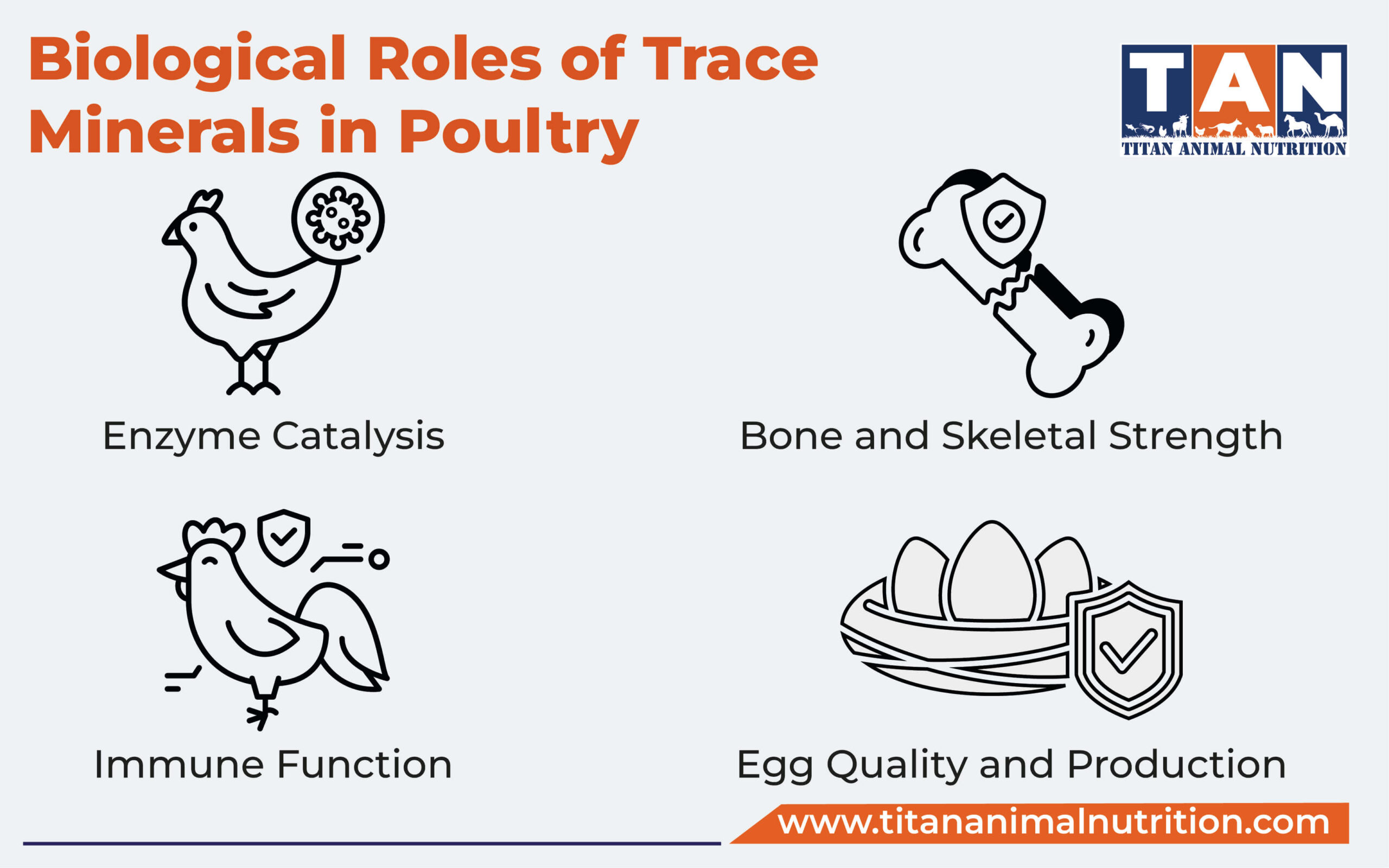
Minerals, particularly trace elements, are involved in several critical physiological functions in poultry:
1. Enzyme Catalysis
Trace minerals serve as cofactors for hundreds of enzymes responsible for carbohydrate, protein, and lipid metabolism.
- Zinc (Zn) is part of carbonic anhydrase, which plays a key role in eggshell formation.
- Manganese (Mn) supports bone development and reproductive processes.
- Copper (Cu) plays roles in iron metabolism and antioxidant defense.
2. Bone and Skeletal Strength
Minerals such as zinc, manganese, and copper support osteogenesis, helping prevent skeletal disorders, bone fragility, and leg issues that are common in fast-growing broilers.
3. Immune Function
Certain minerals especially zinc and selenium modulate the immune system, enhancing disease resistance and antibody responses.
4. Egg Quality and Production
Adequate trace mineral supply directly impacts eggshell strength, shell thickness, albumen quality, and egg weight, important performance parameters in layers.
Why Chelated Minerals Are Superior to Inorganic Forms
1. Higher Bioavailability
One of the key advantages of chelated minerals is that they are better absorbed by the bird’s digestive system. Organic chelates are less likely to form insoluble complexes and more likely to be transported intact into enterocytes. This improved absorption means: Lower total inclusion rates can meet or exceed nutritional needs and birds absorb more of the mineral, improving mineral retention in tissues and eggs.
2. Lower Mineral Excretion
The 2025 MDPI meta-analysis showed that replacing inorganic trace minerals (ITM) with protein-chelated trace minerals (PTM) significantly reduced mineral excretion (Cu, Fe, Mn, Zn) in broiler manure. This not only reflects better utilization but also leads to lower environmental pollution from poultry operations.
3. Improved Growth Performance
The Meta-analysis of 64 global studies revealed that when chelated minerals replaced inorganic minerals in broiler diets:
Body weight gain (BWG) and average daily gain (ADG) were significantly higher.
Feed conversion ratio (FCR) improved (lower values mean better feed efficiency).
Mortality rates decreased.
These results confirm that chelated minerals can support both growth and health more effectively than inorganic sources.
4. Reduced Feed Intake But Better Performance
Surprisingly, birds fed proteinate chelates showed lower total feed intake (FI) and daily FI while still achieving higher growth metrics indicating more efficient nutrient utilization.
Detailed Insights from the 2025 MDPI Meta-Analysis
The MDPI study “The Effect of Chelated Trace Mineral Supplementation in the Form of Proteinates on Broiler Performance Parameters and Mineral Excretion: A Meta-Analysis” provides the most comprehensive data to date. Here are the key takeaways from this review of 288 dietary comparisons involving 194,356 broilers:
Performance Improvements with PTM
- Total Feed Intake (FI): Lower when PTM replaced ITM.
- Average Daily Feed Intake (ADFI): Also reduced under PTM supplementation.
- Average Daily Gain (ADG): Significantly boosted with chelated minerals.
- Final Body Weight: Increased, indicating better growth efficiency.
- Feed Conversion Ratio (FCR): Improved (lower).
- Mortality: Reduced by over 10% in some group comparisons.
These improvements reflect not only better growth but also enhanced resilience and physiological efficiency.
Mineral Excretion and Environmental Impact
The meta-analysis documented significantly lower levels of Cu, Fe, Mn, and Zn in the manure when chelated minerals replaced inorganic forms, a sign of higher utilization and lower waste.
Such reductions matter for environmental sustainability because mineral-laden poultry litter can contribute to soil and water contamination if not managed properly.
Carbon Footprint Benefits
Reduced feed consumption, improved growth rates, and lower mortality also translate into reduced carbon emissions per unit of meat produced, an important consideration for sustainable poultry production.
Chelated Minerals & Egg Quality (Insights from Springer 2024)
The Springer 2024 article “Trace Minerals in Laying Hen Diets and Their Effects on Egg Quality” highlights how trace minerals including chelated forms affect layers’ performance:
Eggshell Formation
Minerals like zinc and manganese are critical for eggshell formation. Chelated forms have demonstrated superior bioavailability, leading to improved eggshell thickness and strength compared with inorganic sources.
For example:
Zinc-methionine chelates have been shown to improve eggshell mechanical properties and albumen quality in laying hens.
Internal Egg Quality
Studies cited in the review show that organic minerals significantly enhance internal egg quality traits such as albumen height and shell membrane integrity compared with traditional inorganic minerals.
Egg Mineral Deposition
Chelated minerals often lead to higher deposition of trace elements in eggs themselves, which can improve their nutritional value for human consumption.
Mechanisms: Why Chelated Minerals Work Better
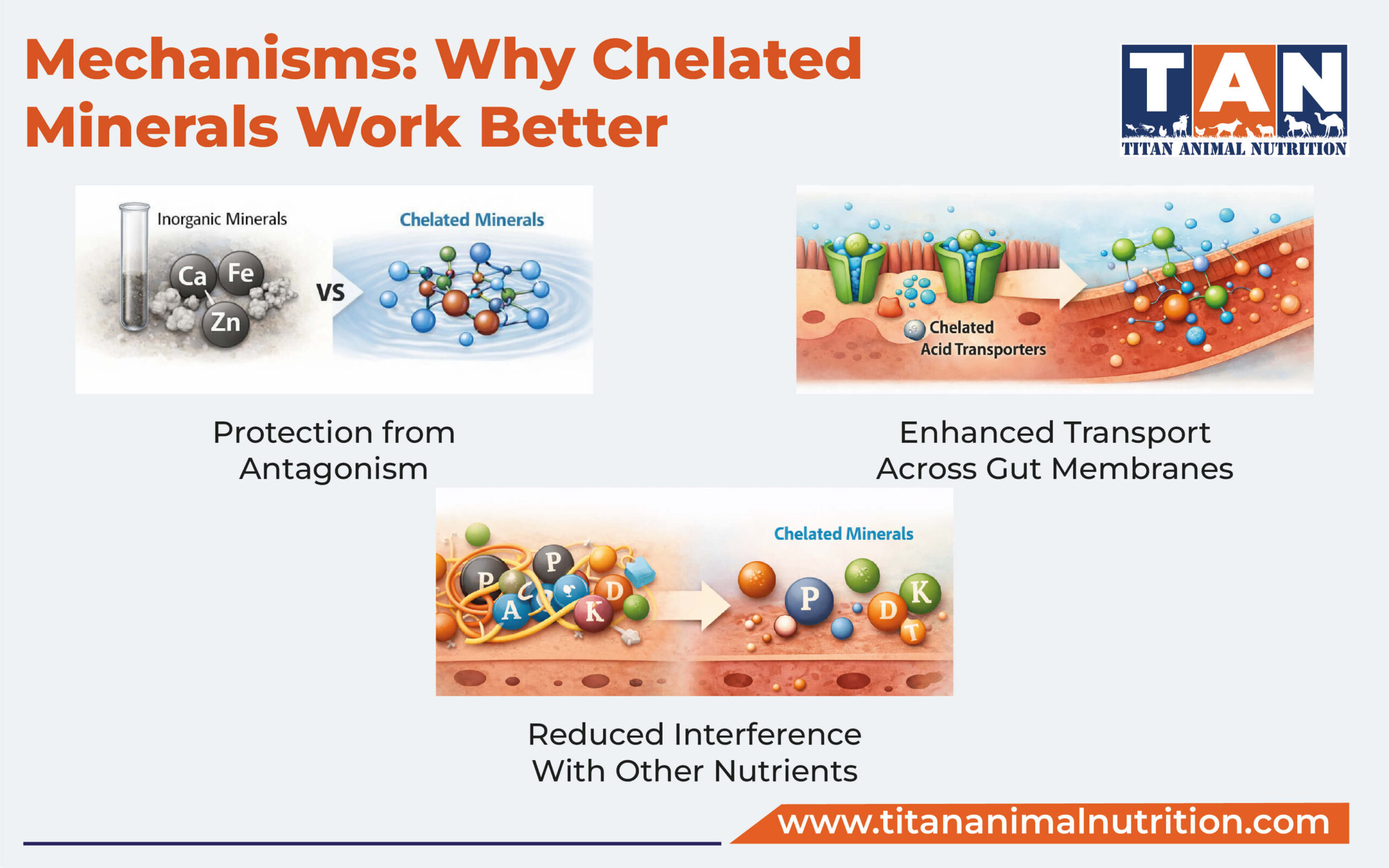
The mechanisms behind chelated mineral effectiveness include:
1. Protection from Antagonism
Chelation shields minerals from forming insoluble complexes in the gut, which often occurs with inorganic salts.
2. Enhanced Transport Across Gut Membranes
Chelates share structural similarity to amino acids, enabling minerals to be transported via amino acid transporters in the intestinal lining. This improves uptake into circulation.
3. Reduced Interference With Other Nutrients
Chelated minerals are less likely to interfere with the absorption of other essential nutrients like phosphorus, fat-soluble vitamins, and other trace elements.
Practical Considerations for Poultry Nutritionists
To maximize the advantages of chelated minerals:
1. Replace Part or All Inorganic Minerals
Replacing inorganic trace elements with chelated forms at the same or even lower inclusion levels can yield superior results.
2. Adjust Diet Formulations
Because chelated minerals are more bioavailable, nutritionists must carefully recalibrate diets often reducing total trace mineral inclusion without compromising performance.
3. Consider Production Systems
Chelated minerals are especially useful under stress conditions (heat stress, disease challenge) because they improve resilience and immune function.
Conclusion
Chelated trace minerals are more than just a trend in poultry nutrition; they represent a science-backed advancement with measurable benefits supported by clinical and meta-analysis data. Studies show that replacing inorganic trace minerals with chelated forms:
- Enhances growth performance, feed efficiency, and mortality rates in broilers.
- Lowers mineral excretion, reducing environmental burden.
- Improves egg quality traits and mineral deposition in layers.
- Contributes to sustainable production by lowering carbon footprint.
For modern poultry producers and feed formulators seeking optimal performance, health support, and environmental responsibility, chelated minerals are a valuable nutritional strategy.
Looking for premium chelated trace minerals for poultry feed formulations? Titan Animal Nutrition offers organic mineral chelates for broilers, layers, and breeders. Contact us for technical specifications and bulk orders.
Frequently Asked Questions (FAQs)
1. What are chelated minerals in poultry nutrition?
Chelated minerals are trace elements like zinc, copper, manganese, iron, and selenium chemically bound to organic compounds (usually amino acids). This binding protects minerals through digestion and enhances absorption compared to inorganic mineral salts.
2. How do chelated minerals improve broiler performance?
Meta-analysis of 194,356 broilers shows chelated minerals significantly improve average daily gain (ADG), feed conversion ratio (FCR), final body weight, and reduce mortality by over 10% compared to inorganic minerals.
3. Are chelated minerals better than inorganic minerals for layers?
Yes. Studies show chelated minerals improve eggshell thickness, strength, albumen quality, and shell membrane integrity compared to traditional inorganic sources. They also increase trace mineral deposition in eggs.
4. Do chelated minerals reduce environmental pollution from poultry farms?
Absolutely. The 2025 MDPI meta-analysis documented significantly lower Cu, Fe, Mn, and Zn excretion in manure when chelated minerals replaced inorganic forms, reducing soil and water contamination.
5. What is the recommended inclusion rate for chelated minerals in poultry feed?
Because chelated minerals have higher bioavailability, inclusion rates are typically 25-50% lower than inorganic sources while achieving equal or better results. Exact rates depend on bird age, production type, and specific mineral.
6. Can chelated minerals improve eggshell quality?
Yes. Zinc and manganese chelates are particularly effective for eggshell formation. Zinc-methionine chelates improve eggshell mechanical properties and thickness in laying hens.
7. Do chelated minerals boost poultry immune function?
Yes. Zinc and selenium chelates modulate the immune system, enhancing disease resistance, antibody responses, and overall resilience, especially under stress conditions like heat stress or disease challenge.
8. Are chelated minerals cost-effective for commercial poultry production?
While chelated minerals have higher upfront costs, they improve feed conversion ratio, reduce mortality, lower feed intake, and decrease mineral excretion. The net result is often improved profitability and sustainability.
9. Can I mix chelated and inorganic minerals in poultry diets?
Yes. Many nutritionists use partial replacement strategies, replacing 25-75% of inorganic minerals with chelated forms to balance performance benefits with cost considerations.
10. Which chelated minerals are most important for poultry?
Zinc, copper, manganese, iron, and selenium are the primary trace minerals used in chelated form. Zinc-methionine, copper-lysine, and manganese-methionine are among the most researched and widely used chelates.
About Titan Animal Nutrition
Titan Animal Nutrition (a Group Company of Titan Biotech Limited) is a specialized division dedicated to manufacturing and exporting premium-quality feed additives and nutritional solutions for the poultry, aquaculture, and livestock industries. With state-of-the-art, GMP-certified manufacturing facilities, we produce scientifically-formulated feed supplements including chelated trace minerals, serving feed manufacturers, integrators, and animal nutrition companies across India and international markets.
References
- MDPI 2025 – The Effect of Chelated Trace Mineral Supplementation in the Form of Proteinates on Broiler Performance Parameters and Mineral Excretion: A Meta-Analysis
https://www.mdpi.com