Table of Content
- Suitable Aquatic Species for Sodium Butyrate
- Benefits of Sodium Butyrate in Aquaculture
- How to Incorporate Sodium Butyrate in Aqua feed?
- Final Thoughts
- Why Choose Titan Animal Nutrition (A group company of Titan Biotech Limited) for Sodium Butyrate?
- Frequently Asked Questions (FAQs)
Aquaculture has become one of the fastest-growing sectors in food production, with increasing global demand for sustainable fish and shrimp farming. One of the most promising advancements in aqua feed is the inclusion of sodium butyrate – a salt derived from butyric acid known for its gut health-promoting properties. Sodium butyrate offers numerous advantages for aquatic animals and farm operations alike, making it a valuable tool for aquaculture companies seeking to enhance productivity, animal health, and environmental sustainability.
This blog explores the wide-ranging applications and benefits of sodium butyrate in aquaculture. It is written in easy-to-understand language, highlighting scientific findings with real-world implications.
Suitable Aquatic Species for Sodium Butyrate
Sodium butyrate can be used across a variety of species in aquaculture. It is safe and effective for:
- Shrimp
- Tilapia
- Catfish
- Salmonids
- Carps
- Trout
- Seabass and seabream
- Other freshwater and marine fish species in hatcheries, nursery, and grow-out stages
The use is particularly beneficial in both high-intensity production systems and in operations aiming for antibiotic-free, sustainable certifications.
Benefits of Sodium Butyrate in Aquaculture

1. Enhancing Gut Health
Sodium butyrate plays a pivotal role in developing healthier and longer intestinal villi in fish and shrimp. These villi are essential structures in the digestive tract that help absorb nutrients from the feed. A well-developed gut wall means animal can make better use of their diets, leading to healthier growth and improved resistance to disease.
Scientific studies have shown that sodium butyrate strengthens the intestinal lining, improving nutrient absorption and minimizing the risk of infections caused by gut permeability.
2. Supporting Beneficial Gut Bacteria
A balanced gut microbiome is critical for maintaining aquatic health. Sodium butyrate supports the growth of beneficial bacteria such as Lactobacillus while suppressing harmful microbes like Vibrio species. A healthy microbial balance improves digestion, enhances immunity, and prevents the onset of digestive issues, keeping fish and shrimp resilient.
3. Better Growth with Less Feed
Sodium butyrate enhances the digestive process, allowing fish and shrimp to convert feed into body mass more efficiently. This improves feed conversion ratio (FCR), a critical metric in aquaculture. With improved FCR, farmers need less feed to achieve the same level of growth, reducing feed costs and increasing profitability.
4. Boosts Growth & Development Under Stress
Farmed aquatic species often encounter stressors like poor water quality, high stocking density, or sudden environmental changes. Sodium butyrate acts as a buffer by stabilizing internal physiological responses. It helps fish and shrimp maintain steady growth even under challenging conditions, making it easier for farms to maintain production schedules.
5. Increases Appetite and Feed Intake
Palatability of feed is crucial in aquaculture. Sodium butyrate enhances the taste and digestibility of feed, encouraging consistent consumption. Fish and shrimp that eat better grow better. This consistent feed intake ensures uniform growth across populations, reducing the need for selective grading.
6. Fights Infections Naturally
One of the key benefits of sodium butyrate is its immune-boosting ability. It increases immune cell activity and as a result, aquatic animals become more resistant to bacterial and parasitic infections. Farms can experience lower mortality rates and reduced losses due to disease outbreaks.
7. Reduces Inflammation & Stress
Chronic inflammation in the gut is a silent threat that can hinder growth and affect overall health. Sodium butyrate has anti-inflammatory properties that soothe the digestive tract and improve gut barrier integrity. By minimizing inflammation, it ensures better nutrient absorption and enhances disease resistance.
8. Cuts Down on Antibiotic Use
The overuse of antibiotics in aquaculture has raised global concerns. Sodium butyrate provides a natural alternative to synthetic growth promoters and antibiotics. By supporting gut health and immunity, it reduces the need for frequent antibiotic treatments, aligning with sustainable and responsible aquaculture practices.
9. Builds a Strong Gut Ecosystem
Beyond immediate digestive benefits, sodium butyrate helps build a resilient gut ecosystem. It encourages microbial diversity, which plays a protective role during times of stress or disease. A strong gut ecosystem also supports better growth and survival rates over the long term.
10. Keeps Water Cleaner and Environment Healthier
Efficient digestion leads to less waste being excreted into the water. When sodium butyrate is used in aqua feed, fish and shrimp utilize more nutrients from their feed, resulting in reduced ammonia and organic waste in ponds or tanks. Cleaner water improves the living environment for aquatic animals and lowers the risk of waterborne diseases.
11. Enhancing Nutrient Absorption
Sodium butyrate increases the activity of digestive enzymes, improving protein and carbohydrate utilization and reducing the need for added dietary supplements.
12. Improving Reproductive Health
Emerging research suggests that sodium butyrate supports reproductive functions in brood stock, improving spawning success and larval survival.
13. Supporting Early Life Stages
Including sodium butyrate in starter diets for larvae and juveniles supports early gut development and immunity, improving survival and growth.
14. Compatibility with Other Feed Additives
Sodium butyrate works well with probiotics, enzymes, and essential oils, allowing for comprehensive functional feed formulations.
How to Incorporate Sodium Butyrate in Aqua Feed?

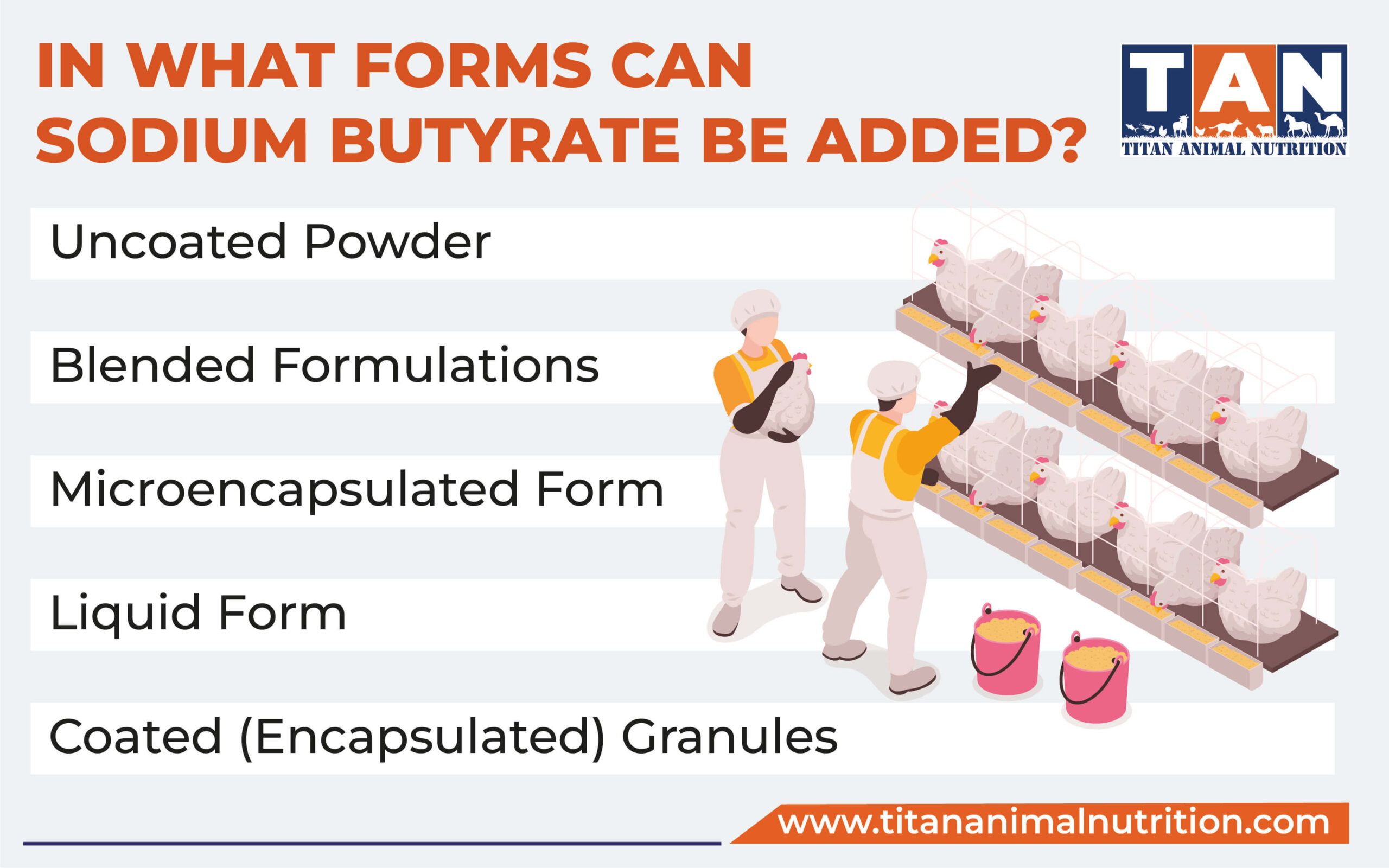
Aquaculture companies can incorporate sodium butyrate into fish and shrimp feeds in several effective ways:
1. Direct Inclusion in Feed Formulations
Sodium butyrate can be mixed into pelleted or extruded feed at the feed mill. Coated or protected forms are preferred for stability and targeted release in the gut.
2. Microencapsulated Sodium Butyrate
Using microencapsulated sodium butyrate ensures it survives the feed manufacturing process and releases in the lower intestine where it is most effective.
3. Top-Coating on Feed Pellets
Sodium butyrate can be mixed with oil and sprayed onto finished feed pellets. This method is simple but may lead to some leaching in water.
4. Water-Soluble Formulations
In hatcheries or recirculating aquaculture systems (RAS), water-soluble sodium butyrate can be used to support early-stage health before full feeding is established.
5. Functional Feed Partnerships
Companies can work with feed manufacturers to design specialized functional diets containing sodium butyrate and other additives to address specific health or performance goals.
Final Thoughts
Sodium butyrate is more than just a feed additive—it’s a strategic investment in the future of aquaculture. Its ability to improve gut health, promote growth, boost immunity, and reduce the environmental footprint makes it an essential part of modern fish and shrimp farming.
The aquaculture companies can benefit immensely by integrating sodium butyrate into their feed solutions. Whether you’re a feed manufacturer, hatchery, or grow-out farm, this versatile additive supports better performance, healthier animals, and more sustainable operations.
Invest in sodium butyrate today—and build a stronger, cleaner, and more profitable aquaculture business for tomorrow.
Why Choose Titan Animal Nutrition (A group company of Titan Biotech Limited) for Sodium Butyrate?
Aquaculture companies looking for a trusted manufacturer of sodium butyrate can confidently purchase from TAN for several reasons:
1. Extensive Industry Experience
With over 33 years in the industry, we have built a strong reputation as a leading manufacturer of high-quality sodium butyrate and animal nutrition products.
2. Wide Product Range
We offer comprehensive feed additives, including sodium butyrate, calcium butyrate, and other nutritional solutions tailored for aquaculture.
3. International Quality Standards
All products are developed under strict quality control systems, ensuring safety, purity, and effectiveness to meet global aquaculture standards.
4. Global Presence
We serve clients in numerous countries, ensuring a consistent and reliable supply chain for aquaculture companies worldwide.
5. Research-Driven Innovation
The company invests in R&D to create innovative solutions that promote animal health and performance, helping farms operate more efficiently and sustainably.
By sourcing sodium butyrate from Titan Animal Nutrition, companies can ensure they are getting a high-quality, scientifically backed additive that supports long-term growth and sustainability in aquaculture.
Frequently Asked Questions (FAQs)
What is sodium butyrate, and how does it benefit aquaculture?
Sodium butyrate is a salt of butyric acid that supports gut health, improves nutrient absorption, boosts immunity, and promotes growth in fish and shrimp. It’s widely used as a feed additive in aquaculture for healthier and more productive farming.
Which species in aquaculture can benefit from sodium butyrate?
It is effective for a variety of aquatic species, including shrimp (L. vannamei, P. monodon), tilapia, catfish, salmon, trout, carp, seabass, and seabream.
Is sodium butyrate safe for long-term use in feeds?
Yes, numerous studies have shown that sodium butyrate is safe for continuous use in aqua feed and can support long-term improvements in growth, immunity, and feed efficiency.
How can sodium butyrate be added to aqua feed?
It can be incorporated during feed manufacturing, either directly or in microencapsulated forms, top-coated on pellets, or added in water-soluble formulations for hatchery systems.
Can sodium butyrate help reduce the need for antibiotics?
Yes, by enhancing gut health and immunity, sodium butyrate reduces the incidence of disease and lowers the dependency on antibiotics, supporting more sustainable aquaculture.
Why should I choose Titan Biotech as a supplier of sodium butyrate?
Titan Biotech offers high-quality, research-backed sodium butyrate, with global reach, strict quality standards, and over 33 years of industry experience in animal nutrition.