
Table of Content
- Metabolic Challenges in Dairy Cattle
- What is Calcium Propionate?
- Mode of Action of Calcium Propionate in Cattle
- Benefits of Calcium Propionate in Cattle
- Applications of Calcium Propionate in Dairy Farming
- Commercial Benefits for Farmers
- Commercial Benefits for Feed Companies
- Recommended Dosage
- Conclusion
- Frequently Asked Questions (FAQ)
- About Titan Animal Nutrition: Calcium Propionate Manufacturer
- References
Calcium propionate is widely used in modern dairy nutrition as a feed additive that supports energy metabolism, prevents metabolic disorders, and improves milk production. Over the past decades, several clinical studies have evaluated its effects in dairy cows, particularly during the transition period and early lactation, when animals face severe metabolic stress.
This article explains the problem in dairy cattle, what calcium propionate is, its mode of action, benefits, applications, and commercial value for farmers and feed companies, based on findings from scientific studies.
Metabolic Challenges in Dairy Cattle
Modern dairy cows produce significantly higher amounts of milk than in the past. While this improves farm productivity, it also creates major metabolic challenges, especially during early lactation.
a. Negative Energy Balance (NEB)
After calving, cows suddenly require a large amount of energy for milk production. However, feed intake cannot immediately match this demand. As a result, cows experience negative energy balance, meaning they expend more energy than they consume.
This leads to several metabolic problems such as:
- Ketosis
- Fatty liver syndrome
- Reduced milk production
- Poor reproductive performance
Research shows that these metabolic issues arise mainly due to low glucose availability and calcium deficiency during the perinatal period.
b. Hypocalcemia (Milk Fever)
Another common disorder is hypocalcemia, also known as milk fever. After calving, cows lose a large amount of calcium through milk production, which can cause:
- Muscle weakness
- Reduced appetite
- Difficulty standing
- Reduced productivity
Without proper nutritional management, these disorders can significantly affect dairy farm profitability.
This is where calcium propionate supplementation becomes extremely valuable.
What is Calcium Propionate?
Calcium propionate is the calcium salt of propionic acid, widely used as a feed additive in livestock nutrition.
It provides two key nutritional components:
- Propionate – which is an important precursor for glucose production in ruminants.
- Calcium – which is an essential mineral for muscle function, milk synthesis, and bone health.
In the rumen, calcium propionate breaks down into propionic acid and calcium ions, both of which play important roles in animal metabolism.
Because of these dual functions, calcium propionate is used to:
- Improve energy metabolism.
- Prevent metabolic diseases
- Enhance milk production
- Preserve feed quality
Mode of Action of Calcium Propionate in Cattle
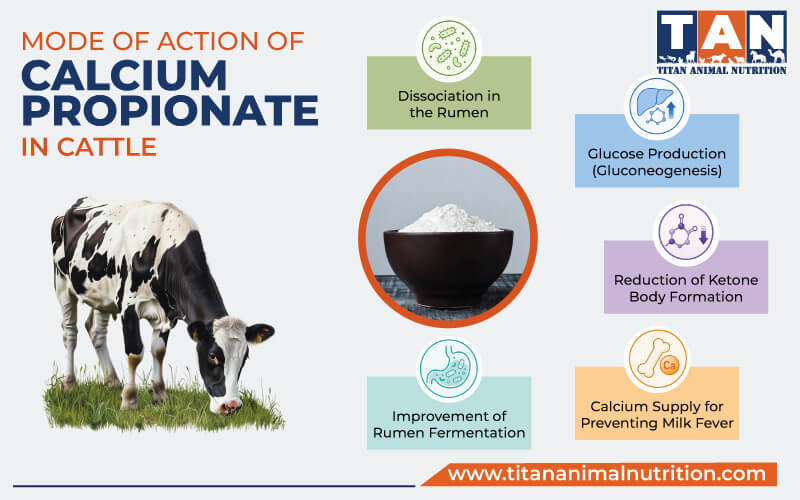
The effectiveness of calcium propionate is mainly due to its unique metabolic pathways in ruminants.
1. Dissociation in the Rumen
After ingestion, calcium propionate dissolves in the rumen and releases propionate and calcium ions. These compounds are absorbed and utilized by the animal for metabolic functions.
2. Glucose Production (Gluconeogenesis)
Propionate is the primary precursor for glucose production in dairy cows. Unlike monogastric animals, ruminants cannot absorb large amounts of glucose directly from feed. Instead, they produce glucose in the liver through a process called gluconeogenesis. Propionate plays a key role in this process and helps maintain adequate glucose levels in the bloodstream.
Higher glucose availability helps cows:
- Maintain energy balance.
- Support milk synthesis.
- Reduce fat mobilization.
3. Reduction of Ketone Body Formation
During negative energy balance, cows break down body fat to meet energy needs. This leads to increased ketone bodies, which cause ketosis. Research shows that calcium propionate supplementation:
- Increases blood glucose levels.
- Reduces beta-hydroxybutyrate (a ketone body marker).
- Reduces non-esterified fatty acids in blood
These changes indicate improved metabolic health in dairy cows.
4. Calcium Supply for Preventing Milk Fever
Calcium released from calcium propionate helps maintain proper blood calcium levels, especially during early lactation. Studies show that oral dosing of calcium propionate can temporarily increase plasma calcium and glucose concentrations in cows.
This supports:
- Muscle contraction
- Nerve function
- Milk production
5. Improvement of Rumen Fermentation
Supplementation with calcium propionate also enhances rumen fermentation. Studies have shown that it can increase the concentration of volatile fatty acids in the rumen and improve ruminal microbial diversity.
Improved rumen fermentation leads to:
- Better feed digestion.
- Higher nutrient availability.
- Improved milk production.
Benefits of Calcium Propionate in Cattle
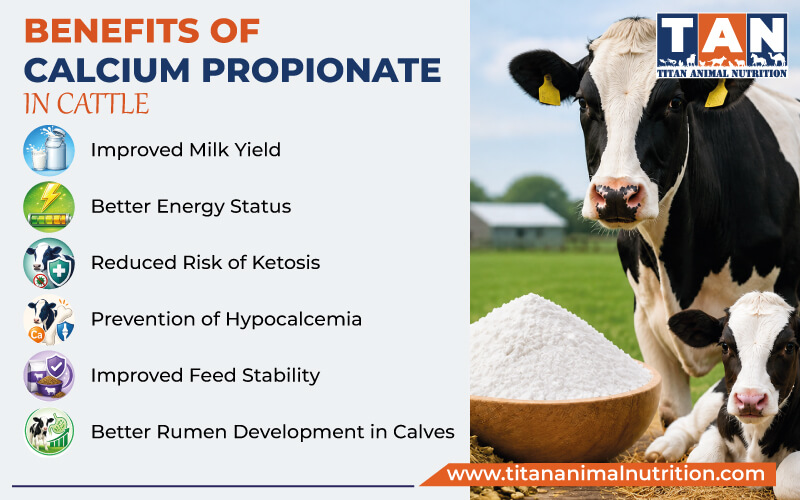
Scientific studies have reported multiple benefits of calcium propionate supplementation in dairy cows.
1. Improved Milk Yield
Clinical trials show that supplementation can increase milk production. In one study involving Holstein cows, supplementation of 350 g/day of calcium propionate produced the highest milk yield during peak lactation. Improved energy metabolism helps cows maintain higher milk production levels.
2. Better Energy Status
Calcium propionate improves several metabolic indicators including:
- Increased blood glucose.
- Reduced ketone bodies.
- Lower fatty acid mobilization.
These changes indicate improved energy balance and metabolic health in dairy cows.
3. Reduced Risk of Ketosis
By providing propionate for glucose synthesis, calcium propionate reduces the risk of ketosis during early lactation. Ketosis prevention improves:
- Feed intake
- Milk production
- Reproductive performance
4. Prevention of Hypocalcemia
The calcium component of calcium propionate helps maintain normal blood calcium levels, reducing the risk of milk fever. This ensures better muscle function and overall health.
5. Improved Feed Stability
Calcium propionate also acts as a mold inhibitor. It helps prevent fungal growth in:
- Silage
- Total mixed rations (TMR)
This improves feed safety and reduces mycotoxin contamination.
6. Better Rumen Development in Calves
Studies have shown that calcium propionate supplementation can promote rumen epithelial development and weight gain in calves, supporting early growth and digestive development.
Applications of Calcium Propionate in Dairy Farming
1. Transition Cow Nutrition
The most common use is during the transition period, which covers 3 weeks before and after calving, to prevent metabolic diseases.
2. Early Lactation Support
It is added to rations to:
- Improve energy balance.
- Increase milk production.
- Reduce ketosis risk.
3. Feed Preservation
Calcium propionate can also be used as a feed preservative to prevent mold growth in silage and total mixed rations.
4. Calf Starter Diets
It may be included in calf diets to promote rumen development and growth.
Commercial Benefits for Farmers

The use of calcium propionate provides several economic advantages to dairy farmers.
1. Higher Milk Production
Better metabolic health leads to:
- Higher milk yield.
- Improved milk quality.
This directly increases farm income.
2. Lower Disease Costs
Preventing metabolic diseases such as ketosis and milk fever reduces:
- Veterinary expenses
- Treatment costs
- Animal losses
3. Improved Reproductive Performance
Healthy cows return to estrus faster and have better conception rates. This improves herd productivity.
4. Increased Longevity of Dairy Cows
Healthy cows remain productive for longer periods, reducing replacement costs.
Commercial Benefits for Feed Companies
Calcium propionate also provides major opportunities for the animal feed industry.
1. Value-Added Feed Products
Feed companies can develop specialised products such as:
- Transition cow premixes.
- Energy supplements.
- Ketosis prevention products.
2. Dual-Function Feed Additive
Unlike many additives, calcium propionate provides:
- Energy metabolism support.
- Calcium supplementation.
This dual functionality increases its value in feed formulations.
3. Market Demand
With increasing milk production and intensification of dairy farming, demand for metabolic health additives is rising globally. Calcium propionate is therefore becoming an important component of modern dairy nutrition.
Recommended Dosage
Research trials have tested different supplementation levels. Typical inclusion levels include:
- 200 to 500 g per cow per day in early lactation diets.
- Studies suggest that around 350 g/day may provide optimal benefits for milk production and metabolic health.
However, exact dosage should be adjusted based on:
- Diet formulation
- Lactation stage
- Veterinary guidance
Conclusion
Calcium propionate has emerged as an important feed additive in dairy cattle nutrition due to its dual role in energy metabolism and calcium supplementation.
Scientific studies show that it can:
- Improve milk yield
- Reduce ketosis risk
- Support glucose metabolism
- Prevent hypocalcemia
- Improve rumen fermentation
- Enhance feed stability
For dairy farmers, this translates into better animal health, higher milk production, and improved profitability. For feed companies, calcium propionate offers opportunities to develop advanced nutritional solutions for metabolic health management in dairy cattle.
As dairy production continues to intensify worldwide, calcium propionate will likely remain a key ingredient in modern cattle nutrition strategies.
Frequently Asked Questions (FAQ)
1. What is calcium propionate used for in cattle?
Calcium propionate is used as a feed additive to improve energy metabolism, prevent ketosis and milk fever, enhance milk production, and preserve feed quality.
2. How does calcium propionate improve milk production?
It provides propionate for glucose synthesis in the liver, which improves energy availability for milk production.
3. Can calcium propionate prevent ketosis?
Yes. By increasing blood glucose levels and reducing ketone body formation, it helps reduce the risk of ketosis in early lactation cows.
4. Is calcium propionate safe for cattle?
Yes. Scientific studies indicate that calcium propionate is a safe and effective feed additive when used at recommended levels.
5. Can calcium propionate improve calf growth?
Yes. Supplementation can promote rumen development and improve growth performance in calves.
6. Can calcium propionate be used as a feed preservative?
Yes. It inhibits mold growth and improves the aerobic stability of silage and total mixed rations.
7. Where can I source high-quality calcium propionate for animal nutrition?
Titan Animal Nutrition is a dedicated manufacturer of calcium propionate for the livestock and dairy industry. Visit www.titananimalnutrition.com for product details, technical specifications, and to connect with a regional representative.
About Titan Animal Nutrition: Calcium Propionate Manufacturer
Titan Animal Nutrition is a dedicated manufacturer of Calcium Propionate and related feed additives for the dairy, livestock, poultry, and aquaculture industries. The company is part of the Titan Biotech Ltd, a globally recognised name in animal nutrition and specialty biochemicals, headquartered in India with an established international distribution network reaching customers across Asia, Europe, the Middle East, Africa, and the Americas.
Titan Animal Nutrition manufactures Calcium Propionate to stringent quality standards, ensuring consistent purity, solubility, and bioavailability in every batch. The company’s production facilities adhere to pharmaceutical-grade quality control protocols, making its products suitable for both commercial farm use and scientific research applications. Every product is manufactured with full traceability, giving feed companies and dairy farmers confidence in the ingredient they are using.
References:
- Zhao Y, Wang H, Chen R, Nan X, Wang Y, Guo Y, Xiong B. (2020). Research on the Applications of Calcium Propionate in Dairy Cows: A Review. Animals, 10(8), 1336. https://doi.org/10.3390/ani10081336 (PMC7460323)
- Zhang F, Zhao Y, Wang H, Chen R, Nan X, Wang Y, Guo Y, Xiong B. (2025). Optimal Calcium Propionate Supplementation in Early-Lactation Dairy Cows Improves Milk Yield and Alters Milk Composition. Animals, 15(20), 2995. https://doi.org/10.3390/ani15202995 (PubMed PMID: 41153922)
- Zhang F, et al. (2021). Effects of Calcium Propionate on Milk Performance and Serum Metabolome of Dairy Cows in Early Lactation. Animal Feed Science and Technology, 281, 115101. https://doi.org/10.1016/j.anifeedsci.2021.115101
- Zhang F, et al. (2022). Alterations in the Milk Metabolome of Dairy Cows Supplemented with Different Levels of Calcium Propionate in Early Lactation. Frontiers in Veterinary Science, 9, 940216. https://doi.org/10.3389/fvets.2022.940216 (PMC9415114)
- Zhang F, et al. (2022). Dietary Supplementation with Calcium Propionate Could Beneficially Alter Rectal Microbial Composition of Early Lactation Dairy Cows. Frontiers in Microbiology, 13, 847488. https://doi.org/10.3389/fmicb.2022.847488 (PMC8964349)
- Jonsson N, et al. (1998). Effects of Oral Dosing with Calcium Propionate on Total Calcium and Glucose Concentrations in the Plasma of the Cow. Journal of Veterinary Medicine Series A, 45(1-10), 531-539. https://doi.org/10.1111/j.1439-0442.1998.tb00808.x (PubMed PMID: 9673568)
- Liu Y, et al. (2018). Calcium Propionate Supplementation Improves Development of Rumen Epithelium in Calves via Stimulating G Protein-Coupled Receptors. Animal, 12(11), 2274-2283. https://doi.org/10.1017/S1751731118000289 (PubMed PMID: 29477151)
- Cao Y, et al. (2020). Calcium Propionate Supplementation Alters the Ruminal Bacterial and Archaeal Communities in Pre- and Postweaning Calves. Journal of Dairy Science, 103(5), 4355-4368. https://doi.org/10.3168/jds.2019-17389 (PubMed PMID: 32113756)
- Liu W, et al. (2017). Growth Performance and Development of Internal Organ and Gastrointestinal Tract of Calf Supplementation with Calcium Propionate at Various Stages of Growth Period. PLOS ONE, 12(7), e0179940. https://doi.org/10.1371/journal.pone.0179940