
Table of Content
- Introduction
- Understanding Calf Starter Feed and Gut Development
- What Are Yeast Products Used in Calf Feed?
- How Yeast Products Work in Calves?
- Benefits of Adding Yeast Products in Calf Starter Feed
- Scientific Evidence Supporting Yeast Use in Calf Starter Feed
- Mechanism of Action of Yeast in Calf Starter Feed
- Types of Yeast Ingredients Used in Calf Starter Feed
- Practical Applications in Calf Nutrition
- Economic Benefits of Yeast Supplementation
- Yeast Products and Future Trends in Calf Nutrition
- Challenges and Considerations
- Conclusion
- About Titan Biotech Ltd
- Frequently Asked Questions (FAQ)
- References
Introduction
Calf nutrition during the early stages of life plays a critical role in determining future productivity, health status, and growth performance. The transition from milk to solid feed is one of the most sensitive phases in a calf’s life because the digestive system is still developing. During this phase, proper rumen development and gut microbial balance become essential for achieving optimal performance.
In recent years, yeast-based feed additives have gained significant attention as functional ingredients in calf starter feed due to their ability to improve digestive health, support immunity, and enhance growth performance. Among these, Saccharomyces cerevisiae (live yeast, yeast culture, and yeast fermentation products) is the most widely studied yeast species in ruminant nutrition.
This article explains the application of yeast products in calf starter feed, their mechanism of action, benefits supported by clinical studies, and practical feeding applications in simple and user-friendly language.
Understanding Calf Starter Feed and Gut Development
Calf starter feed is the first solid feed introduced to calves to stimulate rumen development. A well-formulated starter feed helps:
- Develop rumen papillae
- Promote microbial colonization
- Improve feed intake
- Support early weaning
- Enhance growth performance
However, young calves often face several challenges:
- Digestive disorders (especially diarrhea)
- Inadequate voluntary feed consumption
- Underdeveloped immune defenses
- Behavioral strain at the weaning stage
- Pathogen exposure
Research shows that gut microbial imbalance during early life can negatively affect growth and health. This is where yeast products play an important role as natural gut health modulators.
What Are Yeast Products Used in Calf Feed?
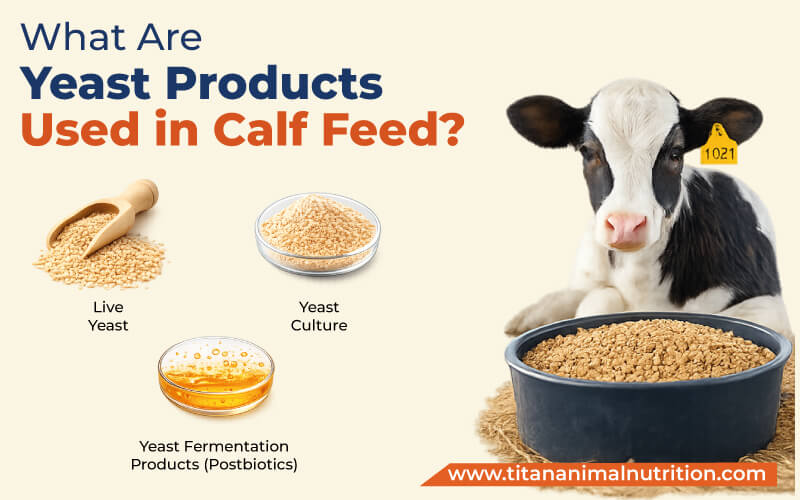
Yeast products used in calf nutrition generally fall into three categories:
1. Live Yeast
Contains viable yeast cells that influence rumen microbial activity.
2. Yeast Culture
Contains yeast biomass and fermentation metabolites that support microbial growth.
3. Yeast Fermentation Products (Postbiotics)
Contain bioactive metabolites produced during yeast fermentation.
These yeast products are commonly added to:
- Calf starter feed
- Milk replacer
- Fully blended complete diet (TMR)
How Yeast Products Work in Calves?
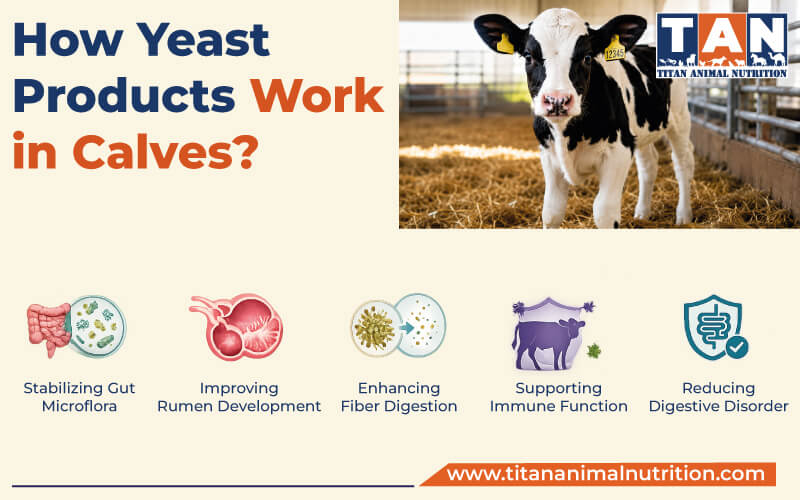
Scientific research shows that yeast products improve calf performance through multiple mechanisms.
1. Stabilizing Gut Microflora
Yeast helps promote beneficial bacteria and suppress harmful microorganisms. A scientific review on yeast utilization in calves explains that yeast products help maintain gastrointestinal microbial balance and improve digestive function.
2. Improving Rumen Development
Studies show yeast supplementation improves rumen epithelial development and increases feed intake. In one controlled study, calves receiving yeast culture showed improved starter intake and better growth parameters compared to control animals.
3. Enhancing Fiber Digestion
Yeast stimulates cellulolytic bacteria responsible for fiber digestion, improving nutrient utilization.
4. Supporting Immune Function
Yeast cell wall components such as beta-glucans and mannan oligosaccharides (MOS) help modulate immune response and pathogen resistance.
5. Reducing Digestive Disorders
Research indicates yeast fermentation products may help reduce diarrhea incidence in calves. A controlled trial found yeast supplementation improved calf health and reduced digestive disorders under commercial conditions.
Benefits of Adding Yeast Products in Calf Starter Feed
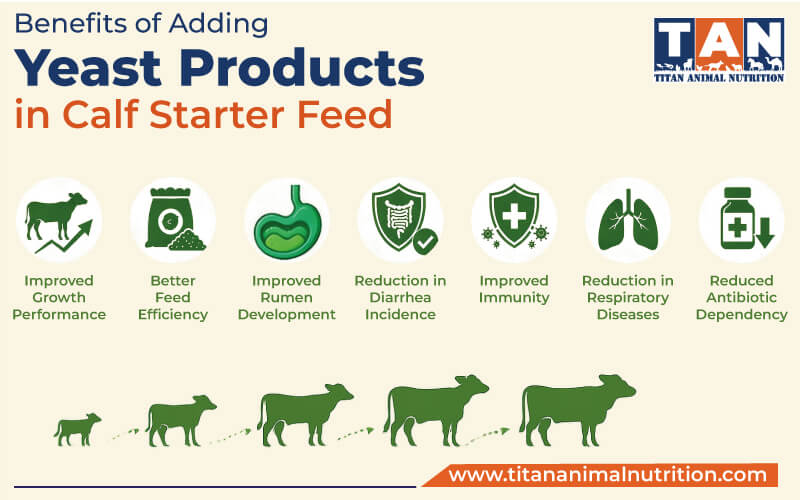
1. Improved Growth Performance
One of the most consistent findings across studies is improved average daily gain (ADG). A study on neonatal dairy calves found that adding yeast culture to calf starter significantly increased:
- Starter intake
- Average daily gain
- Body growth measurements
Improved growth is mainly due to:
- Better digestion
- Improved nutrient absorption
- Higher feed intake
2. Better Feed Efficiency
Yeast supplementation improves feed conversion efficiency, meaning calves utilize feed more effectively. Research has demonstrated improved post-weaning feed efficiency when yeast fermentation products were added to calf diets.
3. Improved Rumen Development
Early rumen development determines future productivity. Yeast supplementation has been shown to improve rumen tissue development and microbial colonization, which supports long-term digestive efficiency.
4. Reduction in Diarrhea Incidence
Digestive disorders are a major cause of calf mortality. Clinical studies show yeast supplementation may reduce fecal scores and digestive disturbances. A study reported improved calf health with reduced digestive problems when yeast fermentation products were included in feed.
5. Improved Immunity
Calves have immature immune systems, making them vulnerable to infections. Yeast products support immune health through:
- Immune cell stimulation
- Antioxidant activity
- Pathogen binding
A recent study highlighted improved health outcomes and reduced disease challenges in calves supplemented with yeast fermentation products.
6. Reduction in Respiratory Diseases
Respiratory disease is another major economic loss factor. Research shows yeast supplementation reduced respiratory treatments and improved health outcomes.
7. Reduced Antibiotic Dependency
With increasing restrictions on antibiotic use, yeast products are becoming natural alternatives. Studies demonstrate yeast products can support calf health and reduce the need for antibiotic interventions.
Scientific Evidence Supporting Yeast Use in Calf Starter Feed
Study 1: Effect of Yeast Culture on Calf Growth and Rumen Development
A controlled experiment evaluated the impact of yeast culture supplementation in calf starter feed.
Study design:
- A group of seventy-five Holstein breed calves
- Yeast added at 0%, 1%, and 2%
- Study duration: 42 days
Results: Calves receiving yeast showed:
- Increased feed intake
- Improved daily weight gain
- Better skeletal growth
- Improved rumen development
Conclusion: Yeast supplementation supports early rumen development and improves growth performance.
Study 2: Yeast Fermentation Products and Calf Health
Another study evaluated yeast fermentation products added to milk and calf starters.
Study design:
- 60 Holstein calves.
- Supplementation from birth to weaning
Results: Supplemented calves showed:
- Improved health scores
- Reduced diarrhea incidence
- Enhanced overall body development and weight progression
Conclusion: Yeast fermentation products can improve calf health and digestive stability.
Study 3: Effect on Growth Performance and Disease Resistance
A recent study evaluated health and performance responses in calves receiving yeast supplementation.
Results: Calves receiving yeast supplementation showed:
- Improved feed efficiency
- Higher post-weaning growth
- Reduced respiratory treatments
Conclusion: Yeast supplementation can improve both performance and health resilience.
Mechanism of Action of Yeast in Calf Starter Feed
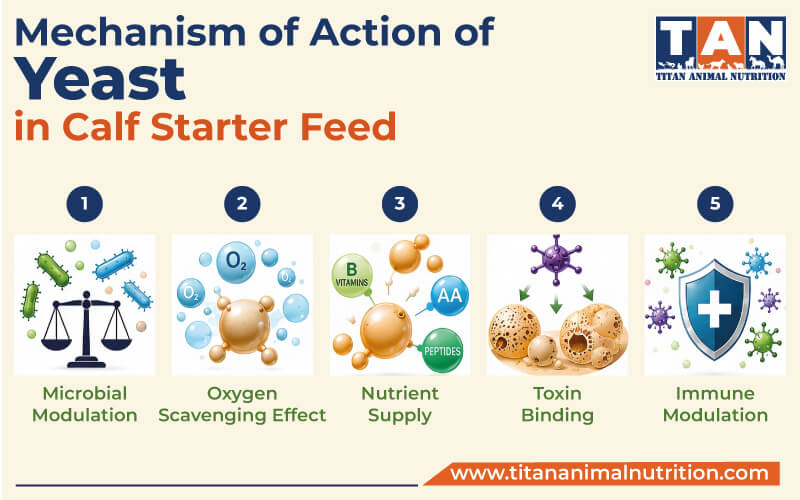
Yeast works through multiple biological pathways.
1. Microbial Modulation
Yeast promotes lactate-utilizing bacteria, fiber-digesting bacteria, and beneficial rumen microbes.
2. Oxygen Scavenging Effect
Yeast removes oxygen from the rumen environment, improving anaerobic microbial activity.
3. Nutrient Supply
Yeast provides vitamins, peptides, and organic acids that support microbial growth.
4. Toxin Binding
Yeast cell walls may bind harmful bacteria and toxins, reducing their negative impact on gut health.
5. Immune Modulation
Beta-glucans stimulate immune cells such as macrophages. A recent review highlighted multiple mechanisms including immune modulation and microbial balance improvement.
Types of Yeast Ingredients Used in Calf Starter Feed
Common yeast ingredients used in calf feed formulation include:
a. Live Yeast (Saccharomyces cerevisiae)
Supports rumen fermentation and stabilizes the microbial environment.
b. Yeast Culture
Supports microbial growth through the presence of fermentation metabolites alongside yeast biomass.
c. Yeast Extract
Provides concentrated nutrients that support microbial activity in the rumen.
d. Yeast Cell Wall
Contains mannan oligosaccharides (MOS) and beta-glucans that support immune function and pathogen resistance.
e. Yeast Postbiotics
Contain fermentation metabolites that provide functional benefits without requiring live cells.
Each type of yeast ingredient offers different functional benefits depending on formulation goals and the specific nutritional challenge being addressed.
Practical Applications in Calf Nutrition
Inclusion in Calf Starter Feed
Typical inclusion depends on product type and formulation goals. General industry practice ranges between:
- 0.5 g to 10 g per calf per day
- 0.5 to 2 percent inclusion in starter feed
Dose depends on product specifications and study design. Manufacturers should follow product-specific guidelines.
Feeding Strategies
Yeast may be added at various stages of early calf nutrition:
- From day 3 onward
- During the pre-weaning phase
- During weaning stress
- During disease challenges
Combination Strategies
Yeast is often combined with complementary ingredients to improve overall gut health benefits:
- Probiotics
- Organic acids
- Mannan oligosaccharides (MOS)
- Enzymes
Economic Benefits of Yeast Supplementation in Calf Nutrition
Besides biological benefits, yeast supplementation offers significant economic advantages for calf producers.
Improved growth leads to:
- Earlier weaning
- Better feed efficiency
- Reduced mortality
- Reduced treatment cost
- Improved lifetime productivity
Better calf development often leads to:
- Better milk yield later in life
- Improved reproductive performance
- Better longevity
Yeast Products and Future Trends in Calf Nutrition
Yeast products are becoming increasingly important in calf nutrition programs due to:
-
- Approaches aimed at minimizing dependence on antibiotic treatments
- Sustainable livestock production goals
Precision nutrition approaches
- Gut microbiome research advances
Future developments in yeast-based calf nutrition may include:
- Precision yeast strains tailored for specific production goals
- Postbiotic formulations with defined bioactive profiles
- Synbiotic combinations pairing yeast with prebiotics
- Microbiome-targeted nutrition strategies
Challenges and Considerations in Yeast Use for Calf Feed
Product Quality
Different yeast products vary in viability, strain, and processing method. Choosing a high-quality yeast ingredient from a reliable supplier is essential for consistent performance.
Diet Composition
Response to yeast supplementation depends on fiber level, energy density, and protein content of the overall diet.
Management Factors
Environmental stress may affect the response to yeast products. Proper housing, hygiene, and management practices support the effectiveness of nutritional interventions.
Proper Dosage
Incorrect dosing may reduce effectiveness. Therefore, proper product selection and adherence to recommended inclusion levels are important.
Conclusion
Yeast products have emerged as valuable functional ingredients in calf starter feed due to their ability to support gut health, improve rumen development, enhance growth performance, and strengthen immunity.
Scientific studies consistently demonstrate that yeast supplementation can improve feed intake, average daily gain, disease resistance, and feed efficiency in calves. These benefits make yeast products an effective nutritional strategy for improving calf health and long-term productivity.
With increasing focus on antibiotic-free animal production, yeast-based feed additives will continue to play an important role in modern calf nutrition programs. Yeast products in calf starter feed, including Saccharomyces cerevisiae yeast culture, live yeast, and yeast fermentation products, offer producers a scientifically supported and practical tool for improving calf gut health and growth performance from the earliest stages of life.
Proper selection of yeast products, correct inclusion levels, and good management practices can maximize the benefits of these functional ingredients.
About Titan Animal Nutrition: Yeast Products and Animal Feed Ingredient Supplier
Titan Animal Nutrition is a specialized manufacturer and supplier of animal feed ingredients, functional feed additives, and nutritional solutions for livestock, poultry, and aquaculture industries. The company is committed to delivering science-backed, high-quality ingredients that support animal health, production performance, and sustainable farming practices.
Titan Animal Nutrition combines deep ingredient expertise with a focus on research-aligned formulation support, helping nutritionists and producers select the right yeast products for their calf starter feed programs. The company’s portfolio supports producers seeking natural, effective, and economically sound solutions for improving calf gut health, growth performance, and immunity.
With a commitment to quality assurance, regulatory compliance, and technical service, Titan Animal Nutrition is a reliable partner for animal feed manufacturers and livestock producers seeking yeast products for calf nutrition and other functional ingredients for modern animal production systems.
Frequently Asked Questions (FAQ)
Q1. What are yeast products in calf starter feed and why are they used?
Yeast products in calf starter feed are functional feed additives derived from Saccharomyces cerevisiae yeast. They include live yeast, yeast culture, yeast fermentation products, and yeast cell wall ingredients. They are used because young calves have developing digestive systems and immature immune defenses, making them susceptible to gut disorders and poor growth. Yeast products help stabilize rumen microflora, improve rumen development, support immune function, and enhance feed utilization, all of which contribute to better calf health and growth performance.
Q2. How do yeast products improve calf gut health?
Yeast products improve calf gut health through several mechanisms. They promote beneficial bacteria while suppressing harmful microorganisms in the gastrointestinal tract. They also remove oxygen from the rumen environment, which supports the growth of beneficial anaerobic bacteria responsible for fiber digestion and nutrient fermentation. Yeast cell wall components such as beta-glucans and mannan oligosaccharides further support gut health by binding pathogens and modulating immune responses.
Q3. Can yeast products in calf feed help reduce diarrhea?
Yes, scientific studies indicate that yeast fermentation products and yeast culture added to calf starter feed may help reduce the incidence and severity of diarrhea. This is primarily because yeast helps stabilize the gut microbial balance, reduces undigested protein fermentation, and supports healthy intestinal function. Clinical trials have reported lower fecal scores and fewer digestive disturbances in calves supplemented with yeast products compared to unsupplemented control groups.
Q4. What is the difference between live yeast, yeast culture, and yeast fermentation products for calves?
Live yeast contains viable yeast cells that are metabolically active in the rumen, helping stabilize microbial activity and support fermentation. Yeast culture contains both yeast biomass and the fermentation metabolites produced during the growth process, which support microbial populations and digestive function. Yeast fermentation products, also called postbiotics, contain bioactive metabolites produced during yeast fermentation but do not require live cells to exert their benefits. Each type offers distinct functional properties depending on the formulation goal.
Q5. At what age should yeast supplementation begin in calves?
Research and practical feeding programs generally recommend starting yeast supplementation from around day 3 of life onward, or when calf starter feed is first introduced. Yeast can be beneficial during the pre-weaning period, throughout the weaning transition when stress is highest, and during the post-weaning phase. Early supplementation helps establish a healthy rumen microbial environment during the critical phase of rumen development.
Q6. How much yeast product should be included in calf starter feed?
Inclusion levels depend on the specific yeast product, its concentration, and the formulation goal. General industry practice ranges from 0.5 g to 10 g per calf per day, or 0.5 to 2 percent inclusion in starter feed dry matter. Because yeast products vary significantly in concentration and activity between manufacturers, it is important to follow product-specific inclusion recommendations and consult with a nutritionist for precise dosing guidance.
Q7. Can yeast products help reduce antibiotic use in calf nutrition programs?
Yes, this is one of the growing areas of interest in yeast product research. Studies demonstrate that yeast products can support calf health, reduce disease incidence, and lower the need for antibiotic interventions. By stabilizing gut microflora, reducing diarrhea and respiratory challenges, and strengthening immunity through beta-glucan and MOS activity, yeast products offer a natural, scientifically supported tool for antibiotic-free calf nutrition programs.
Q8. What does scientific research say about yeast culture and calf growth performance?
Multiple controlled studies support the use of yeast culture for improving calf growth performance. A key study involving 75 Holstein calves found that yeast culture supplementation in starter feed significantly increased feed intake, average daily gain, and skeletal growth over a 42-day period. Rumen development was also improved in supplemented calves. Other studies have confirmed improved post-weaning growth efficiency and reduced disease burden, supporting yeast culture as an effective nutritional tool for growth performance enhancement in calves.
Q9. Are yeast products safe for young calves?
Yes, yeast products including Saccharomyces cerevisiae and its derivatives are considered safe for use in calf nutrition. Research studies across multiple clinical trials have reported no negative effects on fecal quality, immune markers, or gut microbiota stability. Yeast has a long history of safe use in ruminant nutrition, and no adverse effects have been documented at typical inclusion levels used in commercial calf feed formulations.
Q10. How can I source yeast products for calf starter feed formulation?
Titan Animal Nutrition supplies yeast-based feed additives and functional ingredients for calf nutrition programs, including Saccharomyces cerevisiae yeast culture, yeast fermentation products, live yeast, and yeast cell wall ingredients containing beta-glucans and mannan oligosaccharides. For product information, technical data, and supply inquiries for yeast products in calf starter feed, visit titananimalnutrition.com.
References
Effects of Saccharomyces cerevisiae fermentation products on dairy calves
-
- (ScienceDirect Journal of Dairy Science)
Link: View study - Effects of supplemental yeast culture on rumen development and growth in calves
(PubMed study)
Link: View study - Effects of yeast fermentation products on calf health and growth performance
(Open access article)
Link: View study - Review: Utilization of yeast in artificially raised calves
(Open access review)
Link: View study - Yeast supplementation and calf health outcomes
(PubMed clinical study)
Link: View study
- (ScienceDirect Journal of Dairy Science)