
Table of Contents
- What Is Mannan Oligosaccharide (MOS)?
- How MOS Works Inside the Poultry Gut?
- Key Benefits of MOS in Poultry Nutrition
- MOS vs Antibiotics: A Sustainable Alternative
- When to Include MOS?
- Mixability and Stability
- Conclusion
- FAQs
- About Titan Animal Nutrition
- Reference
In modern poultry production, delivering maximum performance while ensuring animal health and food safety has never been more critical. With rising global concerns about antibiotic resistance and consumer demand for natural, sustainable solutions, nutritionists and producers are turning to prebiotics, particularly mannan oligosaccharides (MOS), as a proven feed additive that positively influences gut health, immunity, and production outcomes.
What Is Mannan Oligosaccharide (MOS)?
Mannan oligosaccharide (MOS) is a prebiotic derived from the cell walls of yeast, especially from Saccharomyces cerevisiae. Prebiotics are non-digestible carbohydrates that positively influence the gut microbiome by feeding beneficial bacteria and reducing harmful ones.
Unlike probiotics (which introduce live microbes), MOS works indirectly by shaping the gut environment and boosting natural defense mechanisms. It has become one of the most researched natural feed additives in poultry nutrition over the past two decades.
For a complete range of yeast-derived feed ingredients, including MOS and beta-glucans, visit: https://www.titananimalnutrition.com/mannan-oligosaccharide/.
How MOS Works Inside the Poultry Gut?
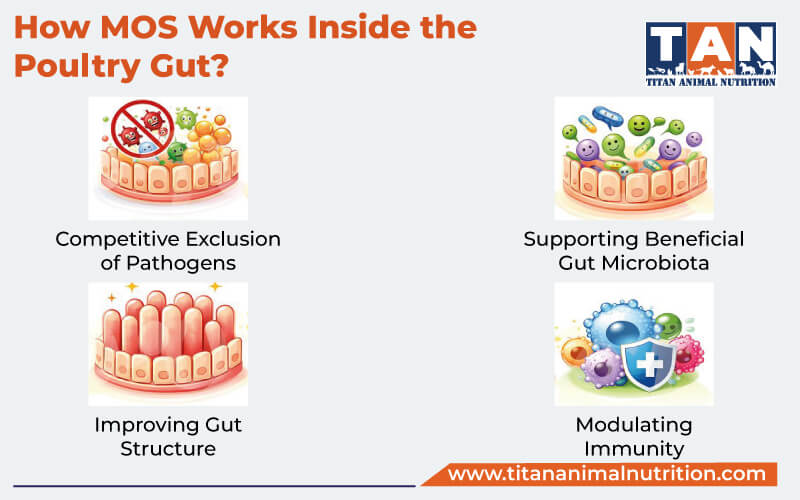
MOS delivers benefits by targeting the digestive system at multiple levels:
- Competitive Exclusion of Pathogens: MOS molecules can bind to harmful bacteria like Salmonella and E. coli so they cannot attach to the intestinal wall. This prevents them from causing disease and allows them to pass harmlessly through the gut.
- Supporting Beneficial Gut Microbiota: By providing a substrate for good bacteria such as Lactobacillus and Bifidobacteria, MOS helps maintain a healthy microbial balance. A balanced microbiome promotes nutrient digestion and reduces inflammation.
- Improving Gut Structure: MOS supplementation is linked to longer intestinal villi and higher villus-to-crypt ratios, structural improvements that enhance nutrient absorption and feed utilization.
- Modulating Immunity: MOS stimulates immune cells in the gut-associated lymphoid tissue, supporting both innate and adaptive immunity, which results in stronger defense against infections.
Key Benefits of MOS in Poultry Nutrition
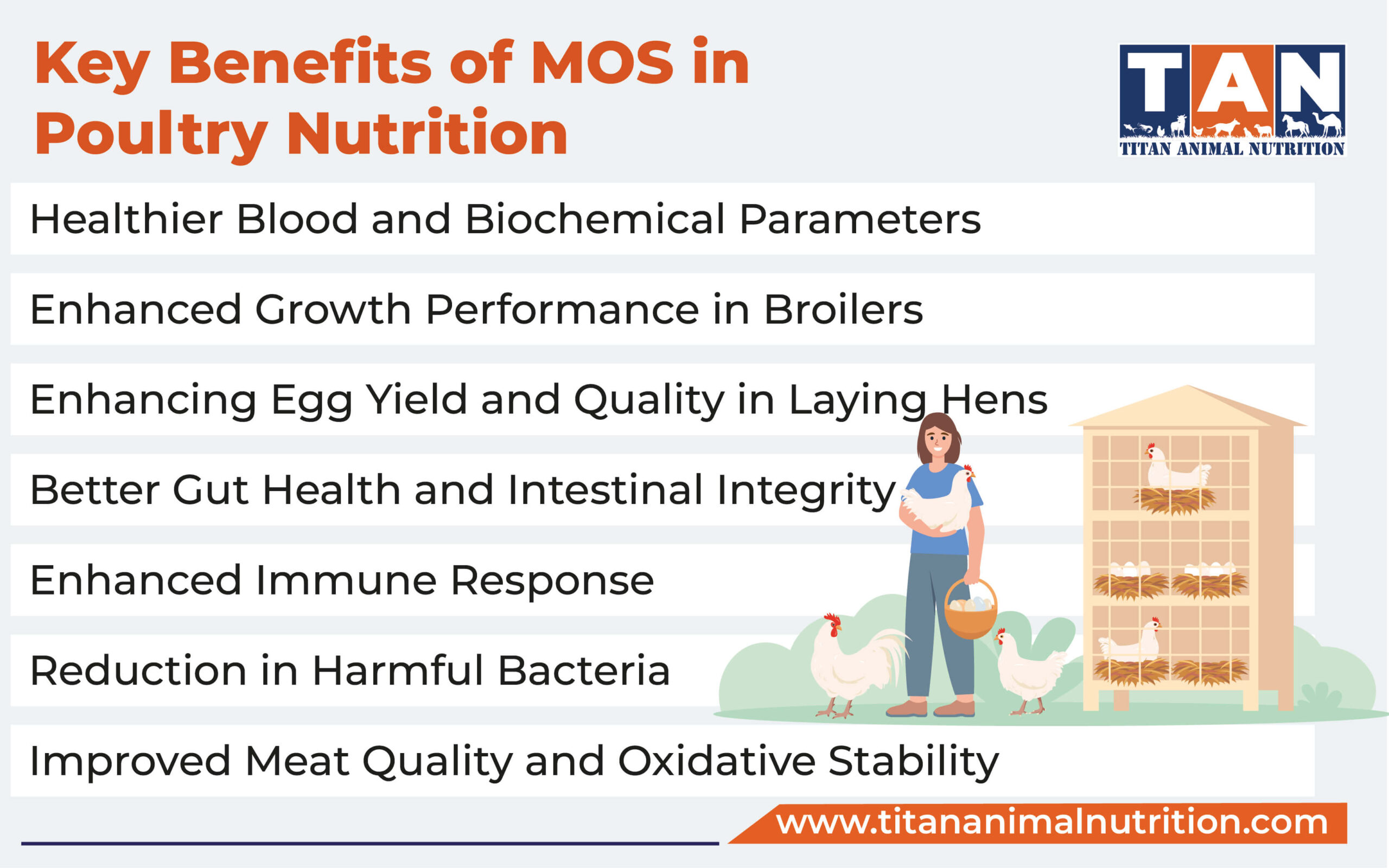
Below, we explore the major benefits of MOS supplementation in poultry diets, each supported by scientific findings.
Enhanced Growth Performance in Broilers.
Good growth performance (body weight gain and feed efficiency) is critical in broiler production. Research has shown that MOS can:
- Increase body weight gain.
- Improve feed conversion ratio (FCR).
- Support beneficial gut morphology.
- Enhance gut hormone expression linked to appetite.
A recent clinical study showed that broilers given MOS along with a probiotic showed significant improvements in body weight and feed efficiency at all growth stages, thanks to better immune responses and improved intestinal structure.
In practice: Broilers receiving MOS feed often show faster growth with the same or less feed input, increasing overall profitability.
Enhancing Egg Yield and Quality in Laying Hens.
Egg production and egg quality are major performance indicators in layer operations. Multiple studies demonstrate that MOS supplementation:
- Increases the number of eggs laid.
- Enhances egg mass per hen.
- Improves feed conversion ratio.
- Strengthens immune parameters.
- Enhances egg quality traits such as albumen quality.
A controlled trial in laying hens found that diets containing MOS significantly increased egg production, egg mass, and feed efficiency compared with non-supplemented birds. Additionally, MOS improved antibody levels against common respiratory viruses in hens, indicating stronger immune protection.
In practice: Including MOS in layer feed can help sustain egg output even under mild immune or environmental stress.
Better Gut Health and Intestinal Integrity.
Strong gut health directly influences feed efficiency, nutrient utilization, and overall performance.
MOS has been shown to:
- Increase villus height in the small intestine.
- Improve villus height/crypt depth ratio.
- Promote healthy microbiota balance.
In one 2025 broiler study, MOS supplementation improved intestinal structure, leading to better nutrient absorption and enhanced immunity.
This structural improvement minimizes unabsorbed nutrients in the gut, which reduces the risk of pathogenic bacterial growth, leading to healthier chickens.
Enhanced Immune Response
Poultry under commercial conditions face multiple immune challenges, including exposure to pathogens and stressors like heat and vaccination.
MOS supplementation has been linked to:
- Higher antibody levels.
- Enhanced innate immune cell activity.
- Better resilience to infections.
Research in laying hens showed that MOS increased levels of key antibodies against influenza and infectious bronchitis viruses, while also improving lymphoid organ development, markers of a stronger immune system.
Healthier Blood and Biochemical Parameters
MOS does not just support gut and immune health. It also improves blood and metabolic indicators.
A study of native chickens showed that MOS supplementation led to higher red and white blood cell counts and improved haemoglobin and haematocrit values, indicating better overall physiological health.
Reduction in Harmful Bacteria
MOS helps reduce colonization of Salmonella and other harmful bacteria in the gut, contributing to safer meat and egg production. In laying hens challenged with E. coli, MOS-fed birds showed:
- Higher egg production.
- Lower harmful bacteria levels.
- Increased Lactobacillus populations in the gut.
- Better nutrient digestibility.
This effect is part of why MOS is considered a natural alternative to antibiotic growth promoters.
Improved Meat Quality and Oxidative Stability
Meat quality is a growing concern among poultry producers, especially as consumers demand healthier products.
A study evaluating MOS and fructo-oligosaccharides in broilers found that MOS supplementation could:
- Reduce meat cholesterol levels.
- Enhance antioxidant capacity.
- Improve microbial quality of meat.
- Enable use of MOS as a natural growth promoter rather than antibiotic use.
This means MOS not only benefits live performance, but also influences the quality of the final product.
MOS vs Antibiotics: A Sustainable Alternative
One of the most compelling reasons poultry producers adopt MOS is its potential to replace or reduce antibiotic growth promoters (AGPs).
MOS works by strengthening the bird’s natural defense and gut health, rather than killing bacteria directly. As antibiotic restrictions tighten globally, MOS offers a research-backed alternative that supports:
- Stable production performance.
- Lower disease pressure.
- Consumer-friendly poultry products.
This aligns with global nutrition trends focused on sustainability and reduced antimicrobial use.
When to Include MOS?
- Throughout the entire growth phase.
- Around vaccination cycles.
- During environmental stress (heat, ventilation changes).
- During starter to grower.
Mixability and Stability
MOS is heat stable and can be included in mash or pellet feeds without losing efficacy. This makes it a practical and reliable option for commercial feed manufacturers and integrators working across different processing formats
Conclusion: Why MOS Matters in Modern Poultry Nutrition
Mannan oligosaccharides are more than just another feed additive. They are a scientifically proven, consumer-friendly, and performance-boosting component of modern poultry solutions.
By improving:
- Growth performance
- Feed efficiency
- Immune response
- Gut health and microbiome balance
- Meat and egg quality
Frequently Asked Questions
1. What exactly does MOS do in the chicken gut?
MOS supports gut health by blocking harmful bacteria, promoting beneficial microbes, improving nutrient absorption, and strengthening intestinal structure.
2. Is MOS safe for all poultry types?
Yes. Research shows it benefits broilers, laying hens, and even native chicken breeds.
3. Can MOS fully replace antibiotics?
While MOS is not a direct antibiotic replacement, it supports natural defenses and can significantly reduce the need for antibiotic growth promoters.
4. When will I see results after adding MOS?
Performance improvements can typically be observed within 2 to 4 weeks, depending on management and diet.
5. Should MOS be used with probiotics?
Yes. Combining MOS with probiotics (synbiotics) has been shown to further improve gut health and performance in some studies.
6. What is the difference between MOS and other prebiotics?
MOS is derived specifically from yeast cell walls and works primarily through pathogen exclusion and immune modulation. Other prebiotics such as FOS (fructo-oligosaccharides) work mainly by feeding beneficial bacteria. MOS and other prebiotics can be used together for complementary effects.
7. Does MOS improve egg quality in layer hens?
Yes. Research has demonstrated improvements in egg production, egg mass, feed conversion ratio, and albumen quality in laying hens supplemented with MOS.
8. Is MOS suitable for antibiotic-free poultry production programs?
MOS is widely used in antibiotic-free and reduced-antibiotic production programs. Its ability to reduce pathogen load and support immunity makes it one of the most practical natural alternatives available to producers.
9. How does MOS affect meat quality in broilers?
Studies have shown that MOS supplementation can reduce meat cholesterol levels, improve antioxidant capacity, and enhance the microbial quality of broiler meat, contributing to a healthier, more market-ready final product.
10. Where can I source MOS for commercial poultry feed?
Titan Animal Nutrition supplies high-quality, standardized MOS products for commercial poultry feed manufacturers and integrators. Visit www.titananimalnutrition.com or contact our technical team for product specifications and supply inquiries.
About Titan Animal Nutrition
Titan Animal Nutrition is a specialized animal feed and nutrition brand operating under the umbrella of Titan Biotech Ltd, a well-established biotechnology manufacturer with decades of experience across fermentation, life sciences, and nutrition industries.
Focused on advancing sustainable and science-backed livestock production, Titan Animal Nutrition supplies a comprehensive range of functional feed additives, yeast-derived ingredients, prebiotics, and performance enhancers to poultry producers, swine operations, dairy farms, and feed manufacturers across global markets.
Every product in our portfolio is developed around verified research, standardized production protocols, and rigorous quality testing, including microbial screening, heavy metal analysis, and batch-level documentation. Our team of nutrition specialists works alongside customers to identify the right ingredient solutions for their specific production goals.
Backed by the manufacturing infrastructure and scientific expertise of Titan Biotech Ltd, Titan Animal Nutrition is committed to helping producers achieve better animal performance, stronger profitability, and greater compliance with the growing demands of antibiotic-free and sustainable farming.
For product inquiries, technical support, or bulk supply information, visit www.titananimalnutrition.com or connect with our team directly.
References (Clinical Studies & Research)
- Mannan oligosaccharides improve laying performance, immunity, and production efficiency in hens — Translational Animal Science 2024.
https://pubmed.ncbi.nlm.nih.gov/39281314/ - MOS, probiotics, and gut morphology benefits in broilers — Poultry Science 2025.
https://pubmed.ncbi.nlm.nih.gov/40997599/ - MOS improves hematological parameters and intestinal health in native chickens — Journal of Basic Medical Veterinary 2025.
https://e-journal.unair.ac.id/JBMV/article/view/66539 - MOS reduces pathogen colonization and improves performance in E. coli-challenged hens — Poultry Science 2015.
https://academic.oup.com/ps/article/94/9/2165/1569894 - Mechanisms of MOS action in broiler diets — World’s Poultry Science Journal.
https://www.cambridge.org/core/journals/world-s-poultry-science-journal/article/use-of-mannan-oligosaccharide-in-broiler-diets-an-overview-of-underlying-mechanisms/11E87A5B63AEC35B3FB97F6A9C92C756